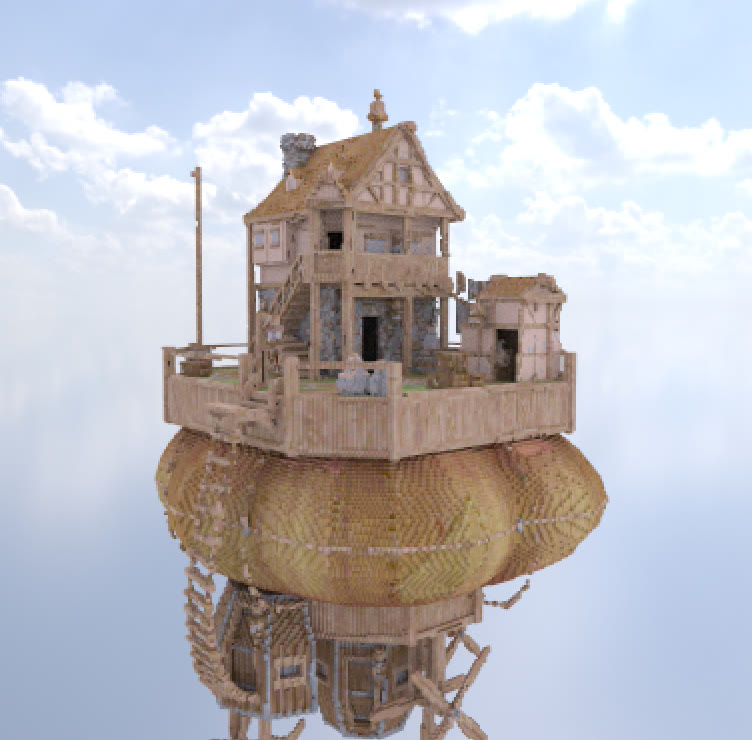
A stylized top down adventure game in Unreal Engine where you explore floating sky islands as a small frog. I designed and built the core gameplay: combat, level design, enemy AI and the story progression. It mixes cozy exploration with action combat.
A real time CPU ray tracer in C++ with reflections, refraction, denoising, TAA and a BVH, running at 60 FPS. I finished it with a small ray traced snake game.
Pathfinding, crowd behaviors and a 2D physics engine in C++, built on an ECS engine. Agents walk a navmesh and avoid each other with RVO and flocking, and the player can shoot them or drop mines.
A Bomberman style arcade game in plain C++ with no engine. I implemented grid based movement, collision detection, bomb chain reactions, enemy AI and the game states.
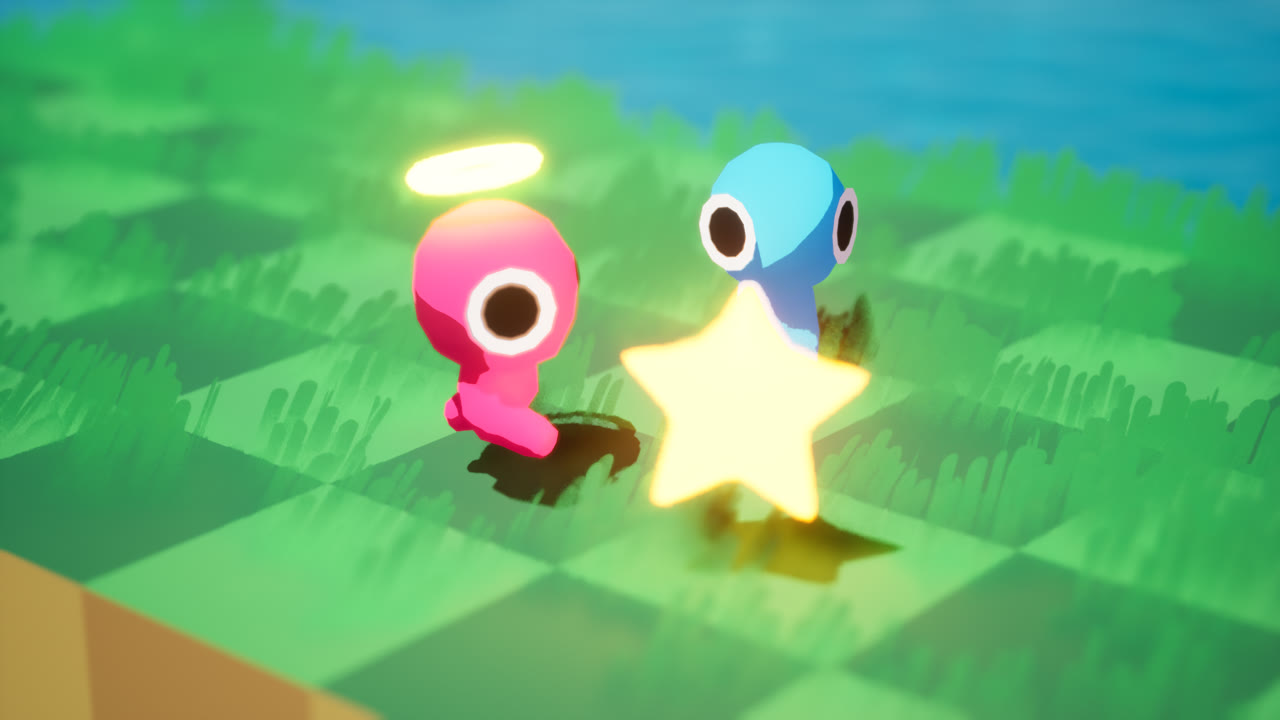
A small puzzle game I made with a friend for the GMTK 2025 Game Jam. You record your movements, hit the clone button and watch your past self repeat every step, but from a new perspective (literally).
A chaotic physics game made for a “Pass the Game” challenge hosted by the game dev YouTuber Lazy Tea. Four developers built it one after another without talking to each other, each continuing from the previous version. I went first, so the core mechanics, the movement and the basic structure the others built on are mine.
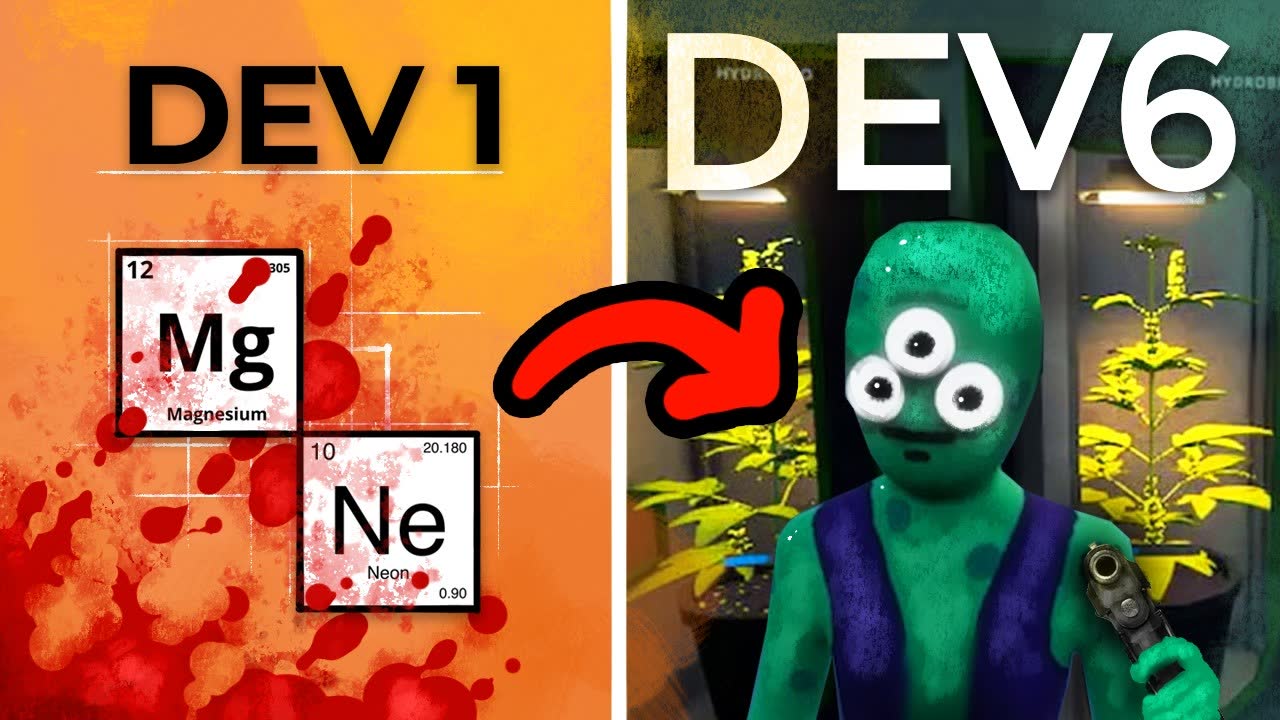
Another “Pass the Game” challenge, this time hosted by the game dev YouTuber Blackthornprod. Six developers took turns building a game inspired by Schedule I, each starting from the previous version without any communication.
I run a game dev YouTube channel with devlogs and behind the scenes looks at my projects. Thousands of people have watched it, and I try to make the videos useful for developers who are still learning.
An eight week project at BUas: a real time CPU ray tracer built in C++ on a voxel template, finished with a small ray traced snake game running at 60 FPS.
Language
C++
Hardware
CPU only
Performance
60 FPS, ~1000 spheres
Duration
8 weeks
Rendering
Point lights, spotlights and an HDR skydome light reflective, refractive and emissive materials. Blue noise sampling, a cross-bilateral denoiser and TAA with reprojection keep the image clean while the camera moves, with depth of field and Panini projection on top.
Performance & the game
Profiling led me to a BVH with a better split and iterative traversal, which brought the renderer to a steady 60 FPS with around 1000 spheres. To prove it could carry gameplay I built a snake game on it, with Catmull-Rom splines for smooth movement, ray traced physics, music and sound.
Gallery
Reflection and refractionMaterial test sceneColoured point lightsSnake game, depth of fieldSpotlight
An eight week project at BUas: pathfinding, crowd behaviors and a physics engine, built in C++ on the university’s ECS engine.
Language
C++
Engine
BUas “Bee” engine (EnTT ECS)
Duration
8 weeks
Navigation & crowds
The map is triangulated into a navigation mesh, and agents find their way with A* and the funnel algorithm. On top of that, RVO, social forces, flocking and wander are separate components that can be mixed per agent and toggled live in the inspector.
Physics
A fixed timestep physics engine with disk and polygon collisions, raycasts and radius checks, used for the player’s bullets and mines. As a bonus I added rigid body rotation, so the walls can be knocked around.
Gallery
Shortest path through the navmeshRVO, two groups passingRotating rigid bodies
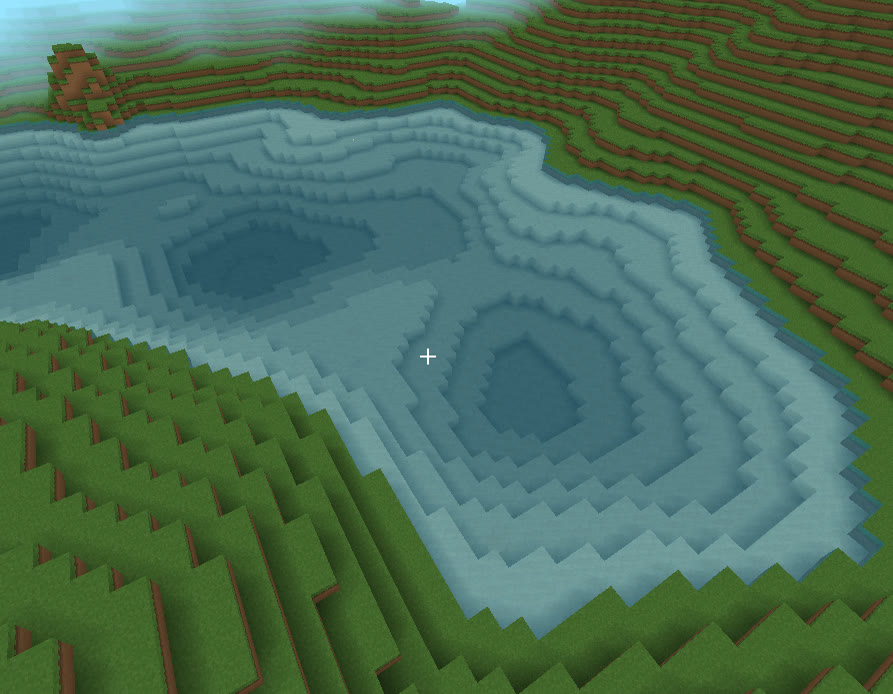
A voxel sandbox engine I built from scratch in C++ and OpenGL. I recreated the core Minecraft mechanics without an existing engine to learn how procedural generation and engine architecture work.
Language
C++
Graphics
OpenGL
Focus
Procedural generation, rendering, performance
World generation
The terrain is generated in chunks from Perlin noise. Chunks load and unload around the player to save memory and frame time, and my mesh generator skips faces that can’t be seen, which made rendering a lot faster.
Rendering
I wrote the renderer directly in OpenGL, with my own shaders, lighting and basic ambient occlusion. Frustum culling skips chunks outside the camera’s view, which kept the frame rate steady.
Gameplay and what I learned
On top of that there’s block interaction, player physics, collision detection and world editing. I learned a lot about graphics programming, memory management, spatial partitioning and low level optimization, and about how sandbox engines are put together.
My first big programming project at BUas, written in C++ without a game engine. I wanted to understand how a game works under the hood, so I built a complete arcade game from scratch.
Language
C++
Engine
None, built from scratch
Focus
Game architecture
Systems
I implemented grid based movement, real time input, collision detection, bomb placement, timed explosions and chain reactions. The gameplay is split into classes such as Player, Bomb, Enemy and Game Manager. We also worked with the rendering pipeline, delta time, the game loop and memory management to keep performance stable.
What I learned
Most of the work was about the basics: game states, entities reacting to each other, and code that stays manageable as it grows. Without an engine to lean on, I got much better at debugging and at structuring C++ code myself.
Gallery
~/about
About me
Hi, I’m Alan, a programmer who likes building things that work well and feel good to use.
I enjoy gameplay AI and physics, and I have experience in both custom C++ engines and Unreal Engine.
I am a 2nd year CMGT student at Breda University of Applied Sciences in the Netherlands.